Juxtaposed with the altered countenance of this country’s populace, as an immigrant, I find myself frequently querying my assumptions about my cohabitants. Who exactly are these folks? This amateur anthropological quest is unlikely to yield any substantive answers, I have realized. Nevertheless, I have located an alluring niche in the memories of my initial impressions about the people in this country. Allow me to indulge.
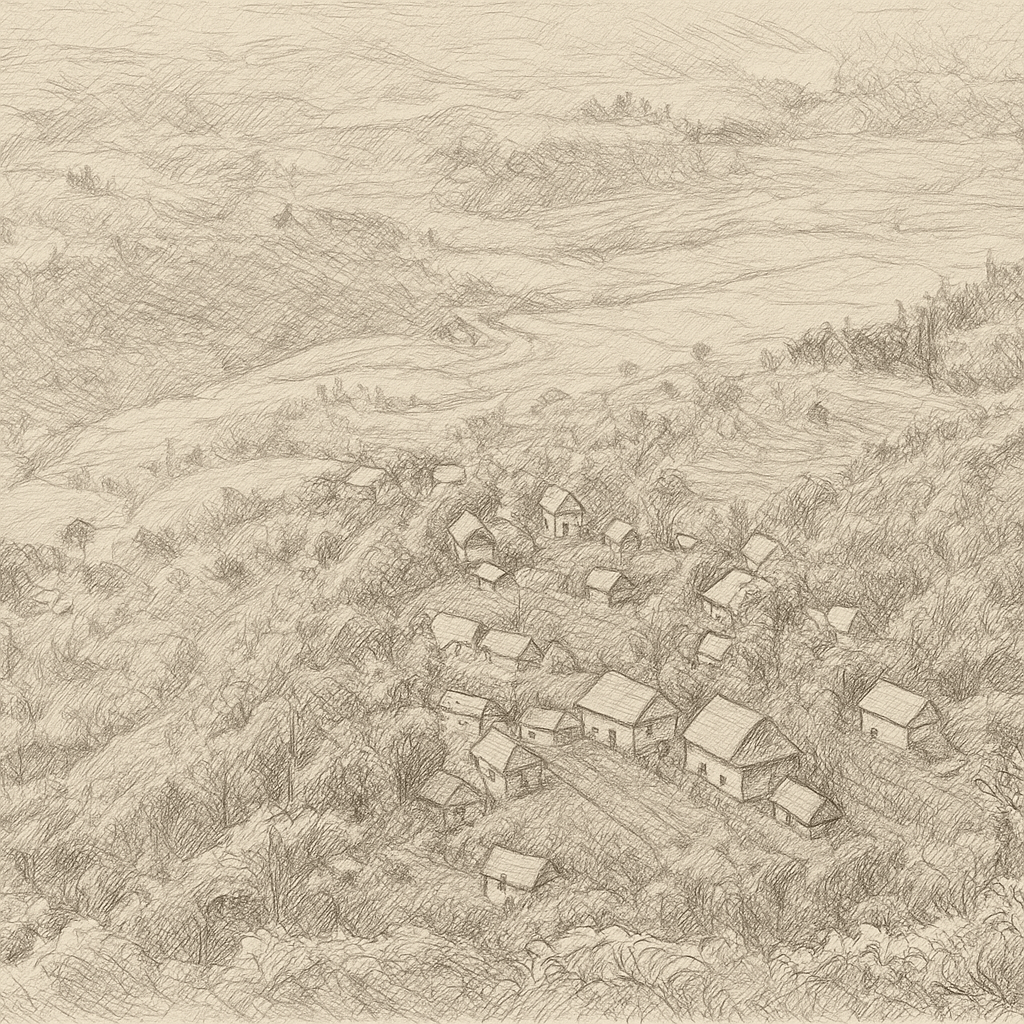
For background, my exposure to Americans was rather limited and distant. As a child in the 80s, I remember strange, large white people- many of them young- riding the hoods of buses in strangely relaxed way, or in fancier buses or minivans marked “Tourist Only”, in the highway adjacent to my parents poultry farm. Perhaps some of them were Americans but could have been any europeans. Another, I recall, was a flock of white people that had camped out in a field at my village, en route to a mountain trek. The accompanying native porters had pitched strange tents, used sophisticated stoves to cook food with unfamiliar smells. They would shoo away little kids who were as amused by this as I and trying to secure a better look at this fascinating stock of humanity. The campers would leave in the morning with part of the field scarred with dug-and-covered holes to accommodate excrements, and strange toilet papers strewn here and there. Remnants of burnt wood, coal and ashes from a bonfire conspicuous at the center of the open field. As a child, the sight of these exotic creatures evoked a sense of an alien world, totally unknown to me. A sense of mystery that existed beyond my world. It, no doubt, opened floodgates for imagination to bloom and prosper. I have often wondered how much of this childhood imagination and a sense of mystery has primed subsequent adventure to foreign lands, unable to subdue the aches of nescience.
Exposure at an older age was during the college in a city. This was a very competitive college established by foreign Jesuits and many faculty and staff that were also foreigners. I happened to be short-listed for interviews based on written exams. This was first ever interview I had partaken in. An American Jesuit priest interviewed me. I recall a total disaster of an interview. I could find no way to connect to this strange man and have any meaningful interaction. He must have been equally distraught. I was ranked essentially at the bottom of the wait list. By a stroke of miraculous luck, I happened to still get into that college. There were additional American faculty members in that college. This was the closest I had interacted with any Americans. Throughout my 2 years, I never found a wavelength for communication with them. While my friends appeared to manage interactions with them with ease I struggled perpetually. I felt like a failure. Looking back, I have a better understanding of this struggle. I was a cultural alien at this college. Majority of the students selected at this place were elites from cities and private schools. They were more privy to the Western cultural mores. Myself, having grown largely in the villages with minimal access to the Western cultural media, lacked the tools to navigate. While I excelled in academics, my youthful mind still longed to conquer this cultural failure. I suspect, this may have occupied some space in my subconscious, priming the longing to explore the other end of this world.
My first voyage to this country was two decades ago. This was the second ever flight I had taken. The first one being a Twin Otter to a tiny airport with 500-meter runway that ended abruptly at a mountain cliff. There may have been a goat as a fellow passenger, sacks of food certainly were occupying several rows of seats at the back. This trip to the mountain range was meant to be a preparation, a last hurrah, before journeying into a foreign land. The swaying tiny airplane traversing rapidly changing air pressures of the Himalayas was no equivalent to the Boeing jet. Yet, it was a taste of the unknown, a flavor of new, that I would experience for a while into the future.
Dazzled, must have been the salient sentiment, beholding the cleanliness and glitter of Bangkok airport during my transit. Yet, the initial impression seared in my memory is that of quiet. Cacophony that typically accompanied the mass of people conspicuously absent. People busy with themselves, doing their own things, avoiding eye contacts. In their private space. Unparalleled claim to privacy has been the arresting impression in my first contacts with prosperity. This has held true for America.
Privacy was sparse in my rural upbringing. Main doors of houses would be locked only when the whole family was away or at night when you were ready to sleep. Rooms were shared and doors either non-existent or left ajar. Any villager could stop by at your house, unannounced, anytime. If it happened to be a meal time, you would share the meal or at least offer. As a kid, it was particularly painful if someone happened to show up while you were going to enjoy a rare treat. Conventions dictated that it be shared and the dutiful grownups ensured that this sacrifice was made. You showered in spring taps, in open space nestled in the woods. Your dignity covered by underwear throughout the shower and shedded with deft maneuver under a towel once you completed the shower. One’s proclivities, quirks, capacities and preferences known to everyone. Alliances and enmities widely apparent. After I moved to a city later during my life, I got some taste of anonymity and privacy. In a populous city with all kinds of people, living in a rented room with conventions ascertaining seclusion; it was comforting. I have enjoyed privacy at an even more opulent scale in America.
Another attribute that stood out was deferential adherence to rules. As someone used to the “survival of the fittest” modus operandi in public spaces where eminence of all stripes trampled and conquered the mundane and weak, the experience of lining up in American public spaces was almost a relaxing experience. Your position was largely assured, a loud tall guy would not just cross the line and join his boisterous friends in front of you. It was almost a given that you will be served in the sequence you have lined up in. It came as naturally to the folks as the hunger pangs came to my stomach. You would see fierce glances, hear grumbles, or outright chastisement if you broke the rules of the lines. This reliance on common sets of rules extended to diverse aspects of social life. It sometimes felt that it crept into spaces occupied by human emotions and empathy. In the feral public spaces of my home country, I was used to seeing and seeking kind gestures borne of carnal empathy- an elderly may be asked to cut the line and go first, a young boy occupying a bus seat may asked to stand to allow a spot for a mother traveling with a child, someone in a hurry pleading to go earlier may be indulged. But in American spaces, it almost seemed odd to entertain these types of emotional responses. A cold set of rules governed supreme. Soft corners of heart invisible and irrelevant. Indeed the machine ran well, with sets of dead rules uncontaminated with squishy emotions. The system was fair but lifeless. Has it neutered certain aspect of human interactions that rely on empathy in the process? I have wondered. And is this a necessary ingredient for the material progress in these prosperous nations- focused on achievements dismissive of distractions that typically hold human relationships.
Performative courtesy would be another trait I would single out. The very first place I had lived in was with my aunt’s family in Mississippi. When we would go out for a walk or drive in neighborhood, random persons would wave and greet consistently. At public spaces, you would see children treated as vulnerable, important, and respected individuals. People would hold door for you, wait patiently behind you while someone was serving you. At stores, it appeared that folks were indeed there to serve you, contrary to the prevalent attitude of shopkeepers in my homeland where they acted as if they were doing a favor to you by selling goods. It felt like this was a kinder version of humanity. It affirmed you as a person, valued individual, visible human being deserving of a respectful interaction. Over time, I have come to realize that beneath this façade, all types of human characters shelter including vicious cruelty and hate. Nevertheless, I would still endorse this performative courtesy compared to the alternative. Authenticity has no a priori supremacy, in ephemeral interactions in public spaces, I have no objection to this positive performance.
And finally, I would be remiss if I did not point out individuality and assured self-centeredness. There was certain degree of confidence exuded by individuals about their capacity and entitlement. The confidence with which they would assert “I” or “me” or “mine” in public spaces was something I was not used to. While I was more used to the duties and obligations as a person, the American individual asserted on their own preferences and likes. They were confident about their entitlement and also their abilities. I would often marvel at the manner of case presentation that an American medical student from my team did compared to myself, a resident. They may not have the depth of understanding or medical facts about the disease, but they would fully utilize the communication capacity- ability to talk with the patient and connect at social level, gathering practical information about the events with patient’s health, reaching out to the right persons/resources- they would own the presentation with confidence and give a coherent sequence of story. They would assert, “I would like to do this,” “I think it is this.” It was marvelous, it even appeared superior to my abilities as a resident, a more advanced trainee in the hierarchy of medical training. Overtime, I have found that this confidence was sometimes overstretched to cover the need for substance. Without certain mastery of facts, tools of management alone carry you only so far. Still, this self-affirming confidence is a uniquely nurturing attribute. Where the self was subdued by the burdens of duties, hierarchies and responsibilities, capacities were unleashed to thrive. As parents, with our own children, my wife and I often wonder where we can strike a balance.
These observations are ultimately generalizations of a group. As is the nature of these exercises, they gloss over individuals and variations. Yet, these are the tools we use all the time and as I try to understand the changed landscape of the political environment in this country, these observations are still revealing.
 Home
Home 
Leave a comment